
Football Club Governance Culture: Spygate
22 May 2026
Pattern, Not Incident: What Spygate Reveals About Football Club Governance Culture
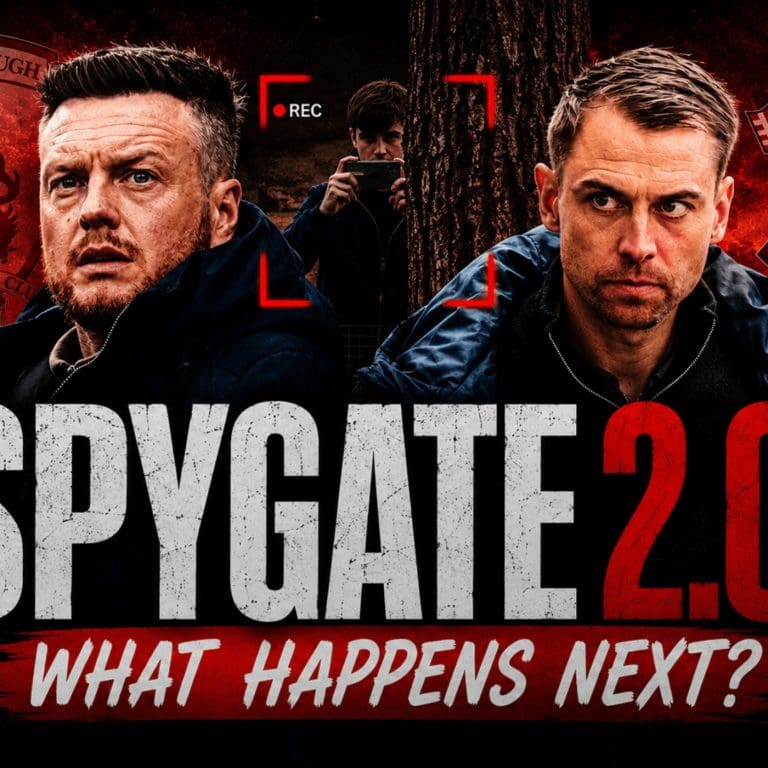
“A contrived and determined plan from the top down.” Those are not our words. They are the independent commission’s in the EFL’s written reasons published on 21 May 2026 (EFL, 2026; Sky Sports, 2026b). The reasons explain why the EFL expelled Southampton from the Championship play-off final. They also make this a culture story for every IFR-regulated club.
Most of the public coverage has been sporting. A staff member was photographed near Middlesbrough’s training ground. The club has been expelled from "the most lucrative game in world football" and received a four-point deduction for next season. The commission dismissed its appeal. The Football Association is now investigating and has the power to charge individuals (Sky Sports, 2026a).
What the Commission Actually Found
The findings beneath the sanctions are what should reach your boardroom. The commission described what happened as “contrived, determined and deplorable” (Sky Sports, 2026b). It concluded that the head coach, Tonda Eckert, had “specifically authorised the observations”. It found “a particularly deplorable approach” in the club’s use of junior members of staff. Southampton admitted breaches across three matches. The opponents were Oxford United in December 2025, Ipswich Town in April 2026, and Middlesbrough in May 2026.
Three matches. Five months. From the top down. Junior staff sent to carry it out. This is not an incident. It is a pattern. And patterns are how regulators read football club governance culture.
The Prize, the Pressure, and the Permission
Before any of this becomes a culture story, it is worth pausing on the context. Southampton was chasing promotion to the Premier League. A 33-year-old head coach was on an interim contract turned permanent, with everything to prove. The club had transformed from relegation candidates to play-off favourites in five months. The financial value of promotion runs to many tens of millions of pounds. Every short-term incentive pointed in the same direction. Win, now.
Performance pressure of this kind is not unique to football. It is familiar in financial services, in professional services, in any setting where the gap between success and failure carries large, visible, near-term consequences. The evidence from those settings is consistent. Pressure does not create poor behaviour on its own. It widens the band of behaviour that people will consider acceptable, and shortens the time they spend considering it (FSB, 2014).
For this reason, checks and balances matter. Whistleblowing policies, escalation pathways, independent oversight of operations, and genuine separation between those who set targets and those who deliver them are not bureaucracy. They are the structures that hold under pressure. When they are absent, or present but not trusted, pressure does the rest.

How Aegis Compass | IFR™ Helps
Our Independent Football Regulation framework (Aegis Compass | IFR™) recognises this directly. Domain 14 (Culture, Training & Capability) covers speak-up channels and protections, alongside behavioural reinforcement and training effectiveness. Domain 10 (Sporting Integrity & Match Conduct) covers integrity reporting channels. A club’s position on these domains is what stands between performance pressure and conduct failure.
Football Club Governance Culture: Spygate - Authorised from the Top Down
The commission did the boardroom a favour. It removed the ambiguity. The head coach authorised the conduct. The commission described what happened as a plan “from the top down” (Sky Sports, 2026b). This is not a control failure. This is a tone-from-the-top failure, in the most literal sense. It is also documented as such.
The authorisation cascaded. The commission found that Eckert authorised observation of a rival’s formation, and separately delegated authority to a colleague to seek information about a key opposition player’s availability (Sky Sports, 2026b). Rule-breaking permission flowed downwards through the football operations chain.
However, two questions remain. The first is: What, above the head coach, allowed this? Who at the Board, Executive, or Sporting Director-level knew, and what did they do? The second is: What, below the head coach, made it executable? No one in the football operations chain refused. Junior staff were deployed. The practice ran for five months without internal escalation.
These are governance questions. The IFR does not regulate what happens on the pitch (Football Governance Act 2025). But the IFR will form views on culture, conduct, and governance for every licensed club. The licensing conditions and the Owners, Directors and Senior Executives (ODSE) test create an ongoing supervisory lens. Conduct of this kind sits squarely within that lens (Independent Football Regulator, 2025).
“Utmost Good Faith” Is a Conduct Standard
Southampton admitted breaches of two regulations. The first required clubs to act with “utmost good faith” towards one another. The second prohibited observation of a rival’s training session within 72 hours of a match.
By contrast, the second is technical. You either watched or you did not. The first is behavioural. It asks how a club treats others. The question is: what would you do if no one were watching? Ultimately, it asks whether fair competition is lived or merely declared.
In fact, behavioural standards of this kind are familiar. The Financial Conduct Authority’s Consumer Duty and Individual Conduct Rules do not prescribe specific actions. They set behavioural expectations and assess whether firms have lived up to them (FCA, 2024). The IFR’s licensing regime works on similar logic. Conduct is judged against principles, not just rules. A breach of principle points to culture.
“His attention to detail is unreal. You go out on a Saturday and you know what you’re doing, you know what the other team are doing”
Tone from the Top: A Football Club Governance Culture Failure
The Financial Stability Board (2014) identified four indicators of sound governance culture. These are tone from the top, accountability, communication and challenge, and incentives. The Southampton case lights up each one.
- Tone: First, the commission identified the head coach as the source of authorisation.
- Accountability: Second, nobody above him appears to have intervened.
- Challenge: Third, no one inside the football operations chain stopped the practice for five months.
- Incentives: Finally, the club was winning, and “attention to detail” was celebrated.
That celebration is worth pausing on. In November 2025, midfielder Flynn Downes told BBC Sport: “His attention to detail is unreal. You go out on a Saturday and you know what you’re doing, you know what the other team are doing” (BBC Sport, 2026). Said in good faith, with admiration, and before anyone outside the club knew what was happening.
That is what cultural normalisation sounds like. Practice becomes routine. Routine becomes celebrated. By the time anyone asks the awkward question, the answer is already “we always did it this way.” The IFR will hear those voices and form a view.
The Junior Staff Knew
The commission’s words on the use of junior staff were specific and the strongest single finding in the written reasons. The commission concluded that junior staff were “put under pressure to carry out activities they felt were morally wrong” (Sky Sports, 2026b). The club sent an intern analyst to observe a rival's training ground.
Read that finding again. The juniors knew. They felt it. They did it anyway. That is not an inference. It is the commission’s direct conclusion, supported by the evidence in front of it.
In fact, this is the heart of why culture matters. Compliance frameworks rest on the assumption that people closest to a problem can raise it. If a junior member of staff knows something is wrong and still feels compelled to act, no compliance framework will reach them in time. The framework is downstream of the culture.
In practice, most clubs have a whistleblowing policy. The question for any board is whether the policy is trusted, understood, and usable in practice. A trusted speak-up channel must reach outside the immediate operational chain. It must offer genuine protection. And it should have been used recently, on something real, with a visible outcome. A policy that has never been tested under pressure is not yet a control.
Every IFR-regulated club should ask the question directly. Imagine a senior figure asking a junior member of staff to do something close to the line tomorrow. What would happen? If the honest answer is “they would probably do it,” that is your finding.
How a Football Club Talks to Its Regulator
There is one more finding worth noting. According to the written reasons, Southampton initially told the EFL that no video was captured or analysed (Sky Sports, 2026b). The commission found this not to be the case.
Equally, candour with a regulator is itself a regulatory expectation. The financial services experience is consistent on this point. Firms that engage openly with their supervisor when something has gone wrong recover faster and with less damage. Firms that minimise, deflect, or qualify do worse (Black, 2008).
The IFR will form views not just on what clubs have done, but on how they respond when challenged. The first conversation matters. So does the second.
Times Change, and So Do Expectations
Spygate is not new. In January 2019, Leeds United were found to have observed Derby County’s training session the day before a Championship match. The EFL fined the club £200,000. The EFL responded by introducing regulation 127 in June 2019, which prohibited the observation of opposition training (Sky Sports, 2026b). The bar moved.
What is striking, with seven years’ hindsight, is how senior figures spoke about the Leeds case at the time. Mauricio Pochettino, then Tottenham manager, told a press conference that “it is not a big issue or a big deal” (BBC Sport, 2019). He said the practice was common in Argentina, where it had been used for thirty years, and that most managers there behaved similarly. That was the prevailing view in a significant part of the game in 2019.
“it is not a big issue or a big deal”
However, it's not the prevailing view now. The EFL’s sanctions in 2026 went far beyond a financial penalty. The commission explicitly said that a fine alone would be “meaningless” (Sky Sports, 2026b). Expulsion from the play-offs. Four points off next season. An FA investigation that can result in charges against individuals. What was treated as a regrettable lapse in 2019 is treated as a serious integrity breach in 2026.
In short, this is the pattern of regulatory evolution. A rule changes. Some adjust. Some carry on as before, reasoning that the consequences are still manageable. Eventually, a case comes along that resets the consequences. Everyone reading the news learns the bar has moved.
The IFR’s arrival in November 2026 is precisely this kind of shift, made structural. Behaviour that was once seen as marginal will be regulated against. Clubs that treat the new bar as a continuation of the old will be exposed. Clubs that recognise the shift and adjust will not.
Five Governance Culture Questions for Your Next Board Meeting
Spygate is not your story. But it could become one. Five questions belong at the next board meeting:
- Could a senior figure at this club authorise rule-breaking conduct without the board ever knowing? If yes, how is that controlled?
- What independent escalation route does a junior member of staff have in football operations or anywhere else? Silence is not the same as health.
- How do our board minutes record culture and conduct discussions? Genuine challenge looks different from polite acceptance, and the IFR can read the difference.
- What signals does our reward structure send about how to win? Short-term results valued more highly than how they are achieved is itself a tone signal.
- Imagine a staff member breaks the rules for competitive advantage. Would they be acting against our culture, or in line with it? The honest answer matters more than any written policy.
The Cost Is Already Visible, and Just Beginning
The financial services regulatory experience is consistent on one point. Firms that addressed culture proactively navigated their regulatory transition more cheaply (Black, 2008). Those who treated culture as a slogan paid more, both financially and reputationally.
The cost to Southampton is already visible. Former Southampton manager Nigel Adkins said the club’s integrity has been “tarnished”. He warned it will “take a long time to come back from this” (BBC Sport, 2026). Former Saints player Jo Tessem put it more directly: “Something has gone seriously wrong if you have continued to break the rules” (BBC Sport, 2026).
In addition, the visible cost is only the start. Players whose contracts were tied to promotion may seek remedy. Season ticket holders who paid for a play-off run that ended in disqualification may organise. Sponsors and commercial partners whose contracts contain reputational clauses will be reviewing them. The FA investigation can lead to individual sanctions on named persons, including the head coach. Each of these exposures sits in a different part of the club’s risk register, and each one was triggered by the same set of decisions.
Culture is the control environment. It shapes behaviour when rules do not quite cover the case. It shapes behaviour when pressure is high, or when shortcuts look profitable. The IFR will not need to define your culture for you. It will read it from your conduct.
Before the IFR Goes Live
This case is also a timely reminder. The EFL is a self-regulatory body. It enforces rules set by the leagues themselves. The sanctions in this case were significant by historical football standards. From November 2026, the Independent Football Regulator will be operating under statutory authority. The IFR will not replace the leagues, but it will sit above them on the conditions that matter most: financial sustainability, corporate governance, owner and director suitability, and fan engagement. The supervisory standard will be higher. Its mechanisms will be stronger. The consequences will reach individuals more directly, through the ODSE regime.
Argus Pro’s position is straightforward. We do not promise to prevent breaches. No framework can. Instead, what we can do is help your club see where it actually stands on governance, conduct, and culture. Aegis Compass | IFR™ is a structured assessment framework, not an audit. It identifies the gaps between what your policies say and how your club actually operates. It is designed to surface those gaps before the regulator does, and to give your board a clear, evidenced view of where to act next.
If you would value an honest, independent view of where your club sits before the IFR forms its own view, now is the time.
Related content

References
BBC Sport (2019) Marcelo Bielsa: Leeds boss admits to spying on all Championship rivals, 16 January. Available at: https://www.bbc.co.uk/sport/football
BBC Sport (2026) Spygate: Who is Tonda Eckert and can he keep his job?, 22 May. Available at: https://www.bbc.com/sport/football/articles/cvgz5x9xxxyo
Black, J. (2008) ‘Forms and paradoxes of principles-based regulation’, Capital Markets Law Journal, 3(4), pp. 425–457.
EFL (2026) EFL Statement: Written Reasons in respect of Southampton FC, 21 May. Available at: https://www.efl.com/news/2026/may/21/efl-statement--written-reasons-relating-to-southampton-fc/
FCA (2024) FG24/3 Final non-Handbook Guidance for firms on the Consumer Duty. London: Financial Conduct Authority.
Financial Stability Board (2014) Guidance on Supervisory Interaction with Financial Institutions on Risk Culture. Basel: FSB.
Football Governance Act 2025, c.27. London: The Stationery Office.
Independent Football Regulator (2025) Statement of Regulatory Approach. Available at: https://www.footballregulator.org.uk
Sky Sports (2026a) Southampton expelled from Championship play-offs over ‘spygate’ with Middlesbrough reinstated, 19 May. Available at: https://www.skysports.com/football/news/11095/13545415/
Sky Sports (2026b) Spygate: Southampton boss Tonda Eckert accepts responsibility for Championship play-off spying scandal, 21 May. Available at: https://www.skysports.com/football/news/11095/13546757/