
What is the Independent Football Regulator?
10 April 2026
What is the Independent Football Regulator, and Why Does It Matter?
The Independent Football Regulator (IFR) is the most significant change to English football governance since the Premier League began in 1992. Established under the Football Governance Act 2025, which received Royal Assent on 21 July 2025, the IFR is now operational and has real powers to reshape how clubs are owned, governed, and run (Football Governance Act 2025).
If your club is in the top five tiers of men's football: the Premier League, Championship, League One, League Two, or the National League, you are already subject to the IFR's oversight. Understanding what it requires and how it thinks is no longer optional.
What the Independent Football Regulator Actually Does
The Independent Football Regulator (IFR) operates as a statutory, independent regulator, established by Parliament. Unlike the Premier League and EFL, it possesses formal legal powers. Specifically, its remit encompasses 116 clubs across the top five divisions of men's football.
To achieve its primary objective of ensuring the long-term financial sustainability of English football, the IFR employs four key tools. First, it mandates a licensing regime that every club must participate in to compete. Second, it implements an enhanced Owners, Directors and Senior Executives (ODSE) test. Furthermore, it establishes mandatory standards for corporate governance and fan engagement. Lastly, it wields real enforcement powers, which include imposing financial penalties, issuing directions, and, in serious cases, suspending or revoking licenses.
Importantly, the IFR does not regulate on-field activities; those remain the responsibility of the FA and the leagues. However, it now takes charge of the financial health, governance quality, and ownership suitability of every regulated club.
How is this different from what came before?
English football has long had 'owners and directors tests' managed by the Premier League, EFL, and National League. However, these tests were fragmented and inconsistently applied. They failed to cover all necessary aspects and only assessed suitability at the point of appointment.
Now, the IFR changes everything. Starting on 12 December 2025, the ODSE test will apply to current owners and senior managers. Additionally, prospective owners and new senior executives must seek formal IFR approval beginning in May 2026. This shift means continuous oversight rather than a simple box-ticking exercise (Lewis Silkin, 2026).
Moreover, the IFR's approach closely resembles that of the Financial Conduct Authority (FCA). Richard Monks, the IFR's Chief Executive, brings nearly 20 years of experience in financial regulation. He played a crucial role in establishing the FCA's senior managers regime. Furthermore, the IFR has signed a memorandum of understanding with the FCA to enhance cooperation and share information (Lewis Silkin, 2026).
Football clubs now face regulations similar to those of financial services firms.
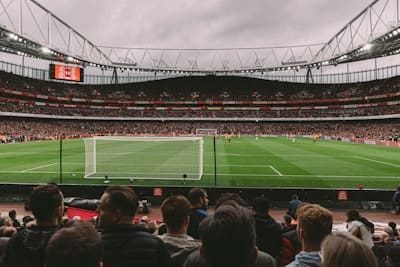
This shift means authorities actively oversee clubs. Their supervisory philosophy emphasises continuous oversight and risk-based intervention. Furthermore, they expect clubs to show that their governance and finances are sound. Compliance is not enough; clubs must provide evidence, not just assertions. In this way, the landscape of football governance is changing significantly.
What does the licensing regime involve?
Every club must hold an operating licence to compete in any of the top five divisions. There are two types:
- A provisional licence, which clubs will apply for during the 2026/27 season ahead of the 2027/28 season
- A full license replaces the provisional one and may take up to three years to achieve compliance with clubs.
To obtain either license, clubs must meet mandatory conditions. These conditions cover four key areas: financial sustainability, corporate governance, owner and director suitability, and fan engagement. The IFR takes a proportionate approach. For instance, it expects different standards from a Premier League club than from a National League club. Nevertheless, every club must prove it meets the standards appropriate for its size and risk profile. This ensures fairness and accountability across the league.
Why does this matter for your club right now?
The provisional licence application window opens in late 2026. While this may sound distant, it is not. Clubs need time to build their governance records, financial plans, and evidence of fan engagement. This evidence will be assessed by the IFR. In fact, most clubs underestimate how long this process will take.
Moreover, there is an immediate concern: the ODSE test is already live. Any club with ownership or governance issues is now on the IFR's radar. The regulator has been clear about its intentions. It aims to work with clubs to resolve any concerns before taking enforcement action. However, this only happens if clubs engage openly and proactively.
Ultimately, clubs should view this situation as a relationship rather than a simple compliance exercise. Those who wait until the licensing window to start preparing will face a more difficult and costly journey. It pays to be proactive.
Ready to understand where your club stands?
Download our free IFR Governance Readiness Self-Assessment — a structured, domain-by-domain diagnostic.
Related content
- Blog: Licensing 101: Understanding Provisional and Full Licences
- Blog: The Owners and Directors Test: What's Changed and Why
- White Paper: From City to Stadium — What Football Can Learn from Financial Services Regulation
References
Football Governance Act 2025. London: HMSO. Available at: https://www.legislation.gov.uk/ukpga/2025/21
Independent Football Regulator (2025) Help protect the future of football. Available at: https://www.footballregulator.org.uk/help-protect-the-future-of-football
Lewis Silkin (2026) Football Club Senior Managers Beware: Inside the IFR's New Owners, Directors and Senior Executives Test. Available at: https://www.lewissilkin.com/insights/2026/02/03/football-club-senior-managers-beware-inside-the-ifrs-new-owners-directors-and-102mgfy
Lewis Silkin (2026) Implementing an effective, powerful but proportionate regime: the Independent Football Regulator is inspired and supported by the Financial Conduct Authority. Available at: https://www.lewissilkin.com/insights/2026/03/03/the-independent-football-regulator-is-inspired-and-supported-by-the-financial-conduct-authority
Sky Sports (2025) Independent Football Regulator ready to finally act against rogue owners when it comes into effect on December 12. Available at: https://www.skysports.com/football/news/11095/13479481
Pinsent Masons (2025) England's Independent Football Regulator. Available at: https://www.pinsentmasons.com/out-law/guides/england-independent-football-regulator